The best multivitamin is not simply the one with the longest ingredient list or the highest percentages. A useful formula should be evaluated by its nutrient amounts, ingredient forms, serving size, safety considerations, and how it fits with the rest of your diet.
Start with the Supplement Facts panel
Multivitamin and mineral products vary substantially. Some provide amounts near the Daily Value for many nutrients; others contain selected nutrients at much higher or lower levels. The label tells you what is actually in the serving.
Begin with four questions: How many capsules or tablets make one serving? Which vitamins and minerals are included? What amount is provided? What percent Daily Value does that represent?
RDA and Daily Value are not identical
The Recommended Dietary Allowance (RDA) is designed for specific age, sex, and life-stage groups. Daily Value (DV), by contrast, is a standardized number used on U.S. labels. That means a product showing 100% DV is not necessarily providing exactly 100% of your individual RDA for every nutrient.
More than 100% is not automatically better
High percentages can look impressive on a label, but nutrient requirements and safety limits differ. Some vitamins are water-soluble, some are fat-soluble, and several minerals can cause problems at excessive supplemental intakes. Your total intake can include food, fortified foods, and other supplements.
Look beyond the front-label claims
- Serving size: Compare products on an equivalent serving basis.
- Nutrient amount: Read the actual quantity as well as %DV.
- Ingredient form: The chemical form should be clearly listed.
- Other ingredients: Review allergens and inactive ingredients.
- Overlap: Check whether other supplements already provide the same nutrients.
- Cautions: Consider medications, health conditions, pregnancy, and age.
Do you need a multivitamin?
A multivitamin can help some people fill nutrient gaps, but it does not replace a varied diet. Whether a particular product is appropriate depends on dietary intake and individual circumstances. The NIH Office of Dietary Supplements notes that multivitamin formulations vary widely, which is another reason to compare labels rather than the category name alone.
Compare McCord Health formulas
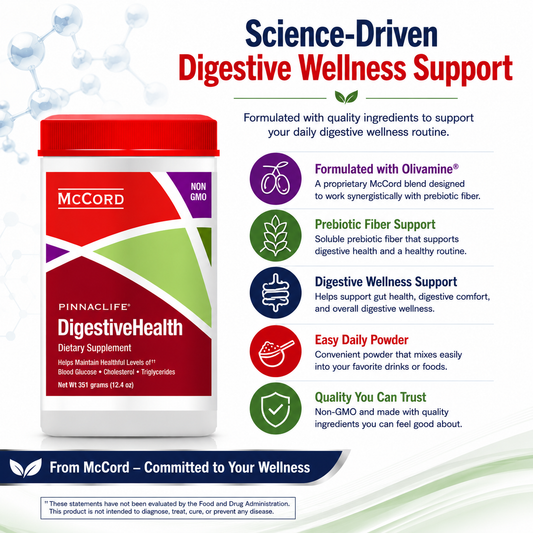
Review the McCord Health Multivitamin Supplement Facts panel for the exact serving and nutrient amounts. You can also browse all McCord Health supplements if you are looking for a more targeted formula.
Bottom line
A good multivitamin decision starts with the label. Focus on useful nutrient coverage, appropriate amounts, and fit with your overall intake—not simply the biggest numbers on the bottle.
Sources and further reading
- National Institutes of Health Office of Dietary Supplements: Multivitamin/mineral supplement fact sheet.
- National Institutes of Health Office of Dietary Supplements: Dietary Reference Intakes and Daily Values.
This article is for general educational purposes and is not medical advice. Talk with a qualified healthcare professional if you have questions about your individual nutrient needs or supplement use.