Prebiotic fiber, probiotics and digestive enzymes are often grouped under digestive wellness, but they are not interchangeable. Understanding the category is an important first step when reading a product label.
Digestive enzymes help break down food
Your digestive system produces enzymes that help break down carbohydrates, fats and proteins. The NIDDK guide to digestion explains how the mouth, stomach, pancreas and small intestine participate in this process. That normal function does not mean everyone needs an enzyme supplement.
Prebiotics are different from probiotics
Prebiotics are nondigestible food components used by certain beneficial microorganisms. Probiotics contain live microorganisms. The NCCIH overview explains this distinction. A product's name or placement in a digestive-wellness collection does not tell you which category it belongs to; the ingredient list does.
Where DigestiveHealth fits
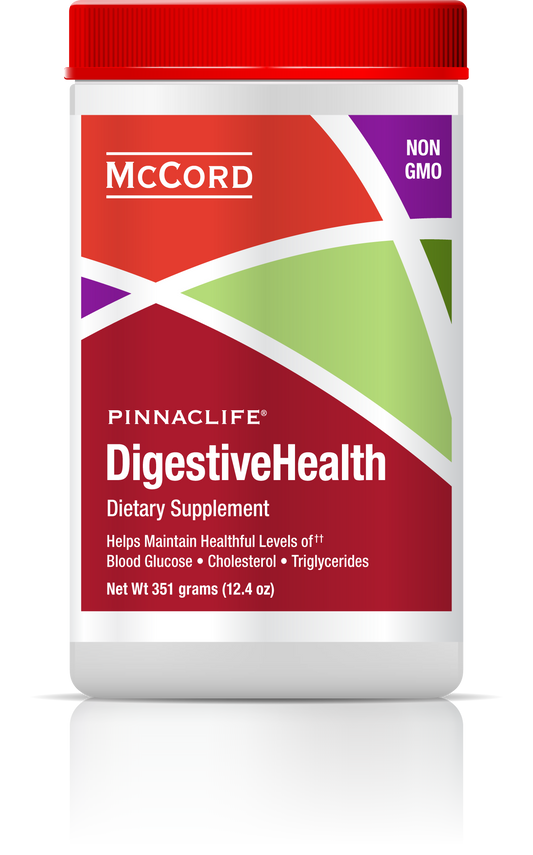
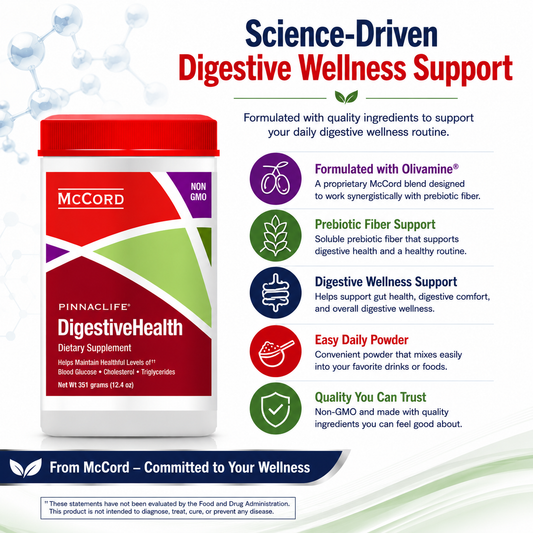
DigestiveHealth is a soluble prebiotic fiber powder in McCord Health's Pinnaclife supplement line. It is not a digestive-enzyme formula or a probiotic supplement. Its current label lists 11 g of soluble dietary fiber per 11.7 g scoop.
If you are comparing it with an enzyme product, begin by recognizing that you are comparing different kinds of products, not two versions of the same thing.
A simple label-reading checklist
- Identify the category and the actual ingredients.
- Check the serving size and the amount per serving.
- Read the directions, warnings and allergen information.
- Ask what evidence supports the specific formula and the benefit being described.
- Discuss persistent symptoms or questions about medicines with a healthcare professional.
Do not use a supplement as permission to eat a food you have been told to avoid, or as a substitute for a prescribed treatment. A general article cannot diagnose an enzyme deficiency or determine the cause of digestive discomfort.
Keep learning
Explore our practical guide to fiber, use the fiber supplement comparison checklist, or review DigestiveHealth's current label.
This article is general education, not individualized medical advice. Dietary supplements are not intended to diagnose, treat, cure or prevent disease. Ask a qualified healthcare professional about your individual needs.