Your Brain Fog Might Actually Be a Gut Problem
You know the feeling: a mid-afternoon haze settles over your thinking, your focus drifts, and no amount of coffee seems to help. Brain fog, low mood, and mental sluggishness are remarkably common among health-conscious adults who otherwise eat well and stay active.
The explanation may not be in your head. It may be in your gut. The gut-brain axis is a bidirectional communication highway linking your gastrointestinal tract to your central nervous system through the vagus nerve, hormonal signals, and immune pathways. Over 90% of the body's serotonin, a neurotransmitter critical for mood and cognition, is synthesized in the gut, not the brain.
That single fact reframes how we should think about mental clarity. Emerging science is revealing that olive-derived polyphenols interact with this axis in ways that go well beyond what standard probiotics offer.
Meet Your Second Brain: The Enteric Nervous System
Embedded in the walls of your gastrointestinal tract is a network of approximately 500 million neurons known as the enteric nervous system, or ENS. This network is so complex that it can operate independently of your brain. Researchers call it the "second brain" because it manages digestion, nutrient absorption, and immune responses on its own.
But the ENS does not work in isolation. It communicates with your brain through three main channels: neuronal signaling via the vagus nerve, hormonal messengers, and immune system pathways. When something goes wrong in the gut, the effects can cascade upward. Chronic gut inflammation, for example, can trigger neuroinflammation, which shows up as brain fog, difficulty concentrating, or mood disruption.
Your gut microbiota play a starring role in this process. The trillions of microorganisms living in your intestines actively produce neurotransmitters, including serotonin, dopamine, and GABA. These chemicals directly influence how clearly you think and how stable your mood feels throughout the day.
When microbial populations fall out of balance, a condition called gut dysbiosis, the production of these neurotransmitters can be impaired. The signaling pathways between gut and brain become noisy and unreliable. The result is cognitive symptoms that many people attribute to stress, aging, or poor sleep, when the root cause may actually be digestive.
How Olive Polyphenols Interact With Your Gut Microbiome
Three olive-derived polyphenols stand out for their documented effects on the microbiome: hydroxytyrosol, oleuropein, and tyrosol. Unlike generic antioxidants, these compounds have been shown to actively reshape the microbial landscape of the gut in beneficial ways.
Research demonstrates that hydroxytyrosol and oleuropein enhance populations of beneficial bacteria, specifically Lactobacillus and Bifidobacterium, while reducing pathogenic species. Tyrosol contributes its own distinct benefits: it can mitigate mucosal damage, strengthen intestinal barrier integrity, and promote the proliferation of Bifidobacteriaceae and Lactobacillaceae families. Together, these polyphenols create a more favorable microbial environment.
One of the most important downstream effects is the increased production of short-chain fatty acids (SCFAs). These metabolites, generated when gut bacteria ferment dietary compounds, reinforce the intestinal lining and carry potent anti-inflammatory properties. SCFAs do not just stay local. They can influence neurogenesis (the creation of new brain cells) and help maintain the integrity of the blood-brain barrier.
This is the mechanistic bridge between digestive health and cognitive clarity. Olive polyphenols feed the right bacteria, which produce SCFAs, which protect both the gut wall and the brain. That chain of events positions olive polyphenols as a clinically studied category distinct from standard probiotic and prebiotic approaches. Rather than introducing external bacteria, these compounds optimize the microbial ecosystem you already have.
The Adlercreutzia Discovery: What a 2026 Study Found
A landmark 2026 study from the PREDIMED-Plus Microbiome project tracked 656 adults over two years, examining how virgin olive oil consumption affects cognitive function through changes in the gut microbiome. The findings were striking.
Researchers identified a gut bacterium called Adlercreutzia as a key mediating species. This single genus was responsible for nearly half of the total cognitive improvement observed in participants who consumed virgin olive oil regularly. The bacterium appears to thrive in a polyphenol-rich gut environment and, in turn, supports the metabolic processes that benefit the brain.
Equally telling was the contrast with refined olive oil. While virgin olive oil improved both gut bacteria diversity and cognitive scores, refined olive oil actually reduced gut bacteria diversity. The difference comes down to polyphenol content: refining strips away the very compounds that drive these benefits.
This finding underscores a simple but powerful point. The right microbial environment, shaped by polyphenol intake, sits upstream of cognitive performance. Feed your gut the right compounds, and your brain reaps the rewards.
Hydroxytyrosol and the Brain: Crossing the Blood-Brain Barrier
Hydroxytyrosol (HXT) has a rare and valuable property among polyphenols: it is rapidly absorbed in the digestive tract and can cross the blood-brain barrier. Once there, it acts directly on endothelial cells and microglia, the brain's resident immune cells.
Its neuroprotective actions are well documented. Hydroxytyrosol reduces oxidative stress in neuronal tissue, preserves nitric-oxide bioavailability (critical for healthy blood flow in the brain), and modulates inflammatory pathways that become increasingly active with age. In a randomized, double-blind, placebo-controlled trial, participants who consumed olive tree pearls rich in hydroxytyrosol and oleuropein showed measurable improvements in composite memory and psychomotor speed on the COGNITRAX assessment at both 8 and 12 weeks.
There is also a mitochondrial dimension. Research published in 2026 in Food & Function found that oleuropein aglycone and hydroxytyrosol promote mitochondrial biogenesis and metabolic efficiency in neuronal cells. Mitochondria are the energy generators inside every cell, and when they underperform in neurons, the result is the fatigue and mental cloudiness so many people experience daily.
A comprehensive 2025 review, also published in Food & Function, found that virgin olive oil polyphenols may protect against neuronal death and inhibit amyloid-β plaque formation through the microbiota-gut-brain axis. This places olive polyphenols squarely in the conversation around long-term cognitive health and brain longevity. An active clinical trial (NCT05898113) is currently investigating the effects of extra virgin olive oil on the microbiota-gut-brain axis in healthy adults, reflecting the growing scientific momentum behind this research.
The Dose Gap: Why Food Alone May Not Be Enough
Standard dietary olive oil consumption rarely reaches the polyphenol thresholds used in clinical studies. The European Food Safety Authority (EFSA) has established that a minimum of 5 mg of hydroxytyrosol and its derivatives per day is needed to confer documented cardiovascular protection. Reaching that level through cooking oil alone is difficult for most people.
Bioavailability adds another layer. Hydroxytyrosol absorption is roughly double when consumed within its natural olive matrix (approximately 44% urinary recovery) compared to water-based preparations (approximately 23%). The form in which you consume these polyphenols matters as much as the quantity.
As the PREDIMED-Plus study made clear, refined olive oil lacks the polyphenol density of virgin or extra-virgin varieties. Most consumers are unaware of this distinction, assuming all olive oil delivers the same benefits.
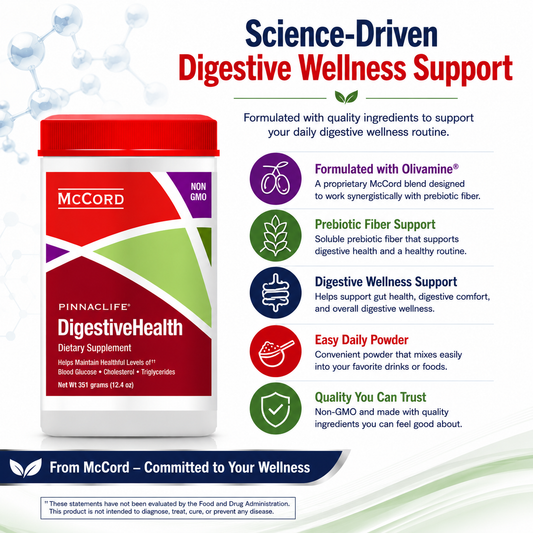
This is where concentrated, olive-derived supplements offer a practical, science-backed solution. McCord Health's Olivamine® blend is one such formulation. Developed by Dr. Darlene McCord, a cell biologist and inventor with decades of biomedical research experience, Olivamine® is a patented eight-ingredient antioxidant formula featuring hydroxytyrosol and oleuropein alongside amino acids and cofactors. It was designed specifically to deliver clinically relevant polyphenol concentrations in a form that preserves the natural olive matrix, closing the dose gap that food alone often leaves open.
Practical Takeaways for Gut-Brain Wellness
The science connecting your gut to your brain is no longer speculative. The mechanisms are becoming clearer with each study: enteric nervous system signaling, microbiome modulation through olive polyphenols, SCFA production that protects the intestinal barrier and the blood-brain barrier, and the direct neuroprotective action of hydroxytyrosol in brain tissue.
Here are four research-grounded steps you can take:
- Choose extra-virgin over refined olive oil. Polyphenol content varies dramatically between grades. Virgin and extra-virgin varieties retain the compounds your gut bacteria need.
- Consider a concentrated olive polyphenol supplement. To reach clinically studied thresholds, a targeted formulation like Olivamine® can bridge the gap between dietary intake and effective dosing.
- Support gut diversity with fiber-rich whole foods. Polyphenols work best alongside a diverse diet. Vegetables, legumes, and whole grains provide the fiber that beneficial bacteria ferment into SCFAs.
- Give it time. Clinical trials have shown cognitive improvements at 8 to 12 weeks. Track how your digestion and mental clarity shift over that window.
Gut-brain health claims on supplement packaging rose 11% between 2020 and 2025, and 44% of consumers now take supplements specifically to support clear thinking and cognitive health. McCord Health products are trusted and recommended by physicians, which speaks to the credibility of the formulations behind them.
The science of the gut-brain axis is advancing rapidly, and the tools it is producing are no longer confined to academic journals. Research-backed, olive-derived supplements are now accessible to anyone who wants to take a more informed approach to cognitive and digestive wellness. Explore McCord Health's Digestive & Immune and Energy & Brain supplement categories to find olive polyphenol formulations aligned with your personal wellness goals.